
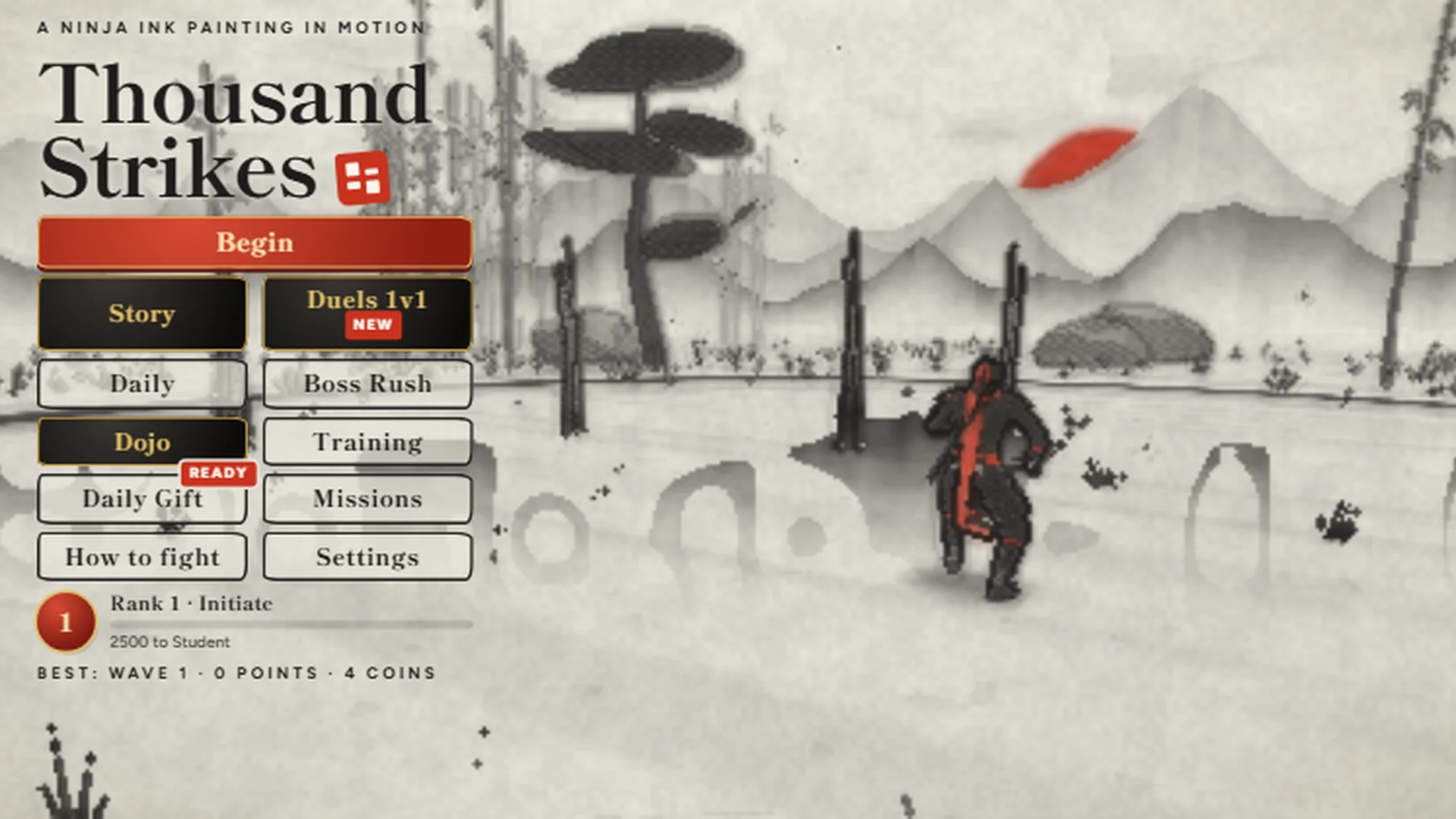
Thousand Strikes · Weapons guide
Thousand Strikes Best Weapons Guide – Which Weapon Should You Choose?
A practical look at all four Thousand Strikes weapons, how they feel to play, and how to test each one so you can pick the style that suits you.
Table of contents
- All Weapons in Thousand Strikes
- Katana – A Familiar Sword Choice
- Twin Blades – A Dual-Wielding Style
- Nodachi – A Large Sword Style
- Kusari Chain – An Unusual Weapon
- Which Weapon Is Best for Beginners?
- How to Test Weapons Properly
- Weapons and Ninja Arts
- Common Weapon Selection Mistakes
- Frequently Asked Questions
- Final Verdict
Choosing the right weapon can make your experience in Thousand Strikes much more enjoyable. Whether you prefer a traditional sword, dual-wielding blades, a powerful-looking great sword, or a chain weapon, each weapon offers a different visual style and combat feel.
Thousand Strikes features four weapons: Katana, Twin Blades, Nodachi, and Kusari Chain. If you are new to the game, you may be wondering which one is best, which weapon you should try first, and how to choose a weapon that fits your playstyle. If you are completely new, ourThousand Strikes beginner guide covers the controls and combat basics first.
This Thousand Strikes weapons guide explains all four weapon choices, provides beginner-friendly recommendations, and shares tips for testing weapons during your runs.
All Weapons in Thousand Strikes
Thousand Strikes offers four different weapon types. Here is a quick overview before looking at each weapon in more detail.
| Weapon | Weapon Type | Recommended For |
|---|---|---|
| Katana | Traditional Japanese sword | Players who prefer a familiar sword style |
| Twin Blades | Dual-wielding weapons | Players who enjoy the visual style of dual weapons |
| Nodachi | Large Japanese sword | Players attracted to a heavier sword style |
| Kusari Chain | Chain weapon | Players who want to experiment with a different weapon style |
These descriptions are based on the weapons' identities and appearance. They should not be treated as confirmed rankings of damage, speed, reach, or effectiveness.
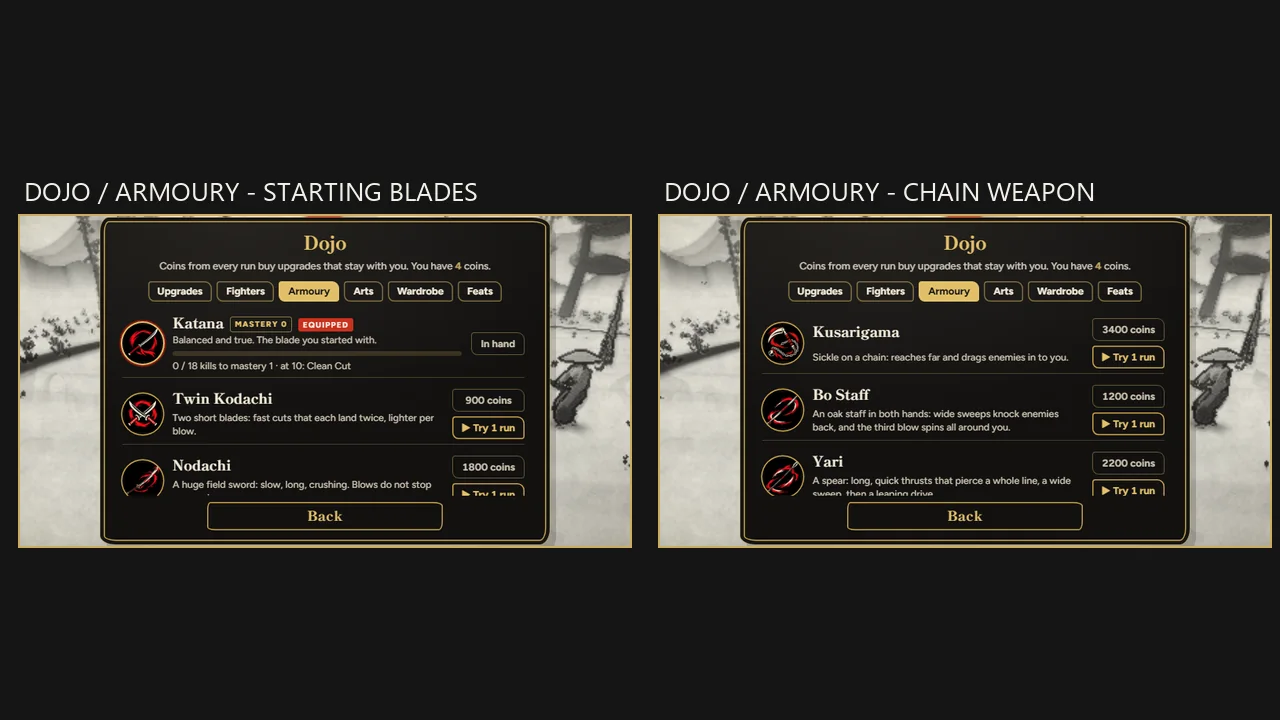
1. Katana – A Familiar Sword Choice
The katana is one of the most recognizable Japanese weapons. It is a natural weapon to try first if you enjoy the traditional sword-fighting style.
Why Try the Katana?
- Familiar sword-based combat style.
- A straightforward weapon to start experimenting with.
- A good option for players who prefer a classic ninja or samurai aesthetic.
Katana Tips
When testing the katana, focus on learning your attack timing. Avoid repeatedly attacking when enemies are about to strike, and practice moving away after an attack.
Try using the katana during your first few runs so you can focus on understanding the game's combat system instead of learning an unfamiliar weapon at the same time. Ourbeginner combat tips explain how to practice attacking, guarding and dodging in a low-pressure run.
2. Twin Blades – A Dual-Wielding Style
Twin blades are designed around the visual idea of fighting with two weapons. Players who enjoy dual-wielding combat may want to experiment with this option.
Why Try Twin Blades?
- A distinct dual-weapon visual style.
- An alternative to traditional single-sword combat.
- Worth testing if you enjoy aggressive-looking fighting styles.
Twin Blades Tips
Do not assume that dual weapons automatically mean higher damage or faster attacks. The game's publicly available descriptions do not provide verified damage or attack-speed comparisons.
Instead, test the weapon yourself:
- Observe its attack animations.
- Check how comfortable its attack timing feels.
- Notice how easily you can reposition.
- Compare how it feels against single enemies and groups.
3. Nodachi – A Large Sword Style
The nodachi is a large Japanese sword. Its appearance makes it an appealing option for players who enjoy powerful-looking weapons and a heavier sword aesthetic.
Why Try the Nodachi?
- A distinctive large-sword appearance.
- An alternative to the katana's traditional sword style.
- A good choice for players who enjoy the visual feel of larger weapons.
Nodachi Tips
When testing the nodachi, pay close attention to attack timing and how much time you have to reposition after attacking.
If an attack animation feels longer, make sure you have enough space before committing to it. Do not assume a larger weapon is automatically stronger or slower in the game without testing its actual performance.
4. Kusari Chain – An Unusual Weapon Choice
The kusari chain offers a different visual identity from the three sword-based weapon styles. It is worth trying if you want to change your approach to combat.
Why Try the Kusari Chain?
- A distinctive chain-based weapon style.
- A different visual and combat identity from swords.
- An interesting choice for players who enjoy experimenting.
Kusari Chain Tips
Spend some time understanding the weapon's animation and how it behaves in combat.
When testing it, pay attention to:
- Attack timing.
- How enemies respond.
- Whether you can attack safely while surrounded.
- How easily you can move away after an attack.
Do not assume the chain has a specific range advantage unless you confirm it during gameplay.
Which Weapon Is Best for Beginners?
If you are new to Thousand Strikes, the best approach is to choose a weapon that feels comfortable and allows you to learn the basic combat mechanics.
Here is a simple recommendation based on playstyle preferences.
| Your Preference | Weapon to Try |
|---|---|
| Traditional sword style | Katana |
| Dual-wielding style | Twin Blades |
| Large sword appearance | Nodachi |
| Different weapon style | Kusari Chain |
This is a preference-based recommendation, not an official weapon tier list.
My Recommended Starting Order
If you have no idea where to start, try this order:
- Katana: Learn the basic combat rhythm.
- Twin Blades: Experiment with a dual-wielding style.
- Nodachi: Try a large sword and compare the attack feel.
- Kusari Chain: Explore a different weapon style.
The order is designed to help you experiment gradually. It does not mean the katana is objectively stronger than the other weapons.
How to Test Weapons Properly
Switching weapons without paying attention to how they perform can make it difficult to understand their differences.
Use this simple test during your runs.
Step 1: Test Normal Attacks
Attack a few enemies and observe the animation. Notice how the weapon feels when you attack repeatedly.
Step 2: Test Charged Attacks
If the game allows charged attacks with your weapon, try holding the attack button in a safe situation.
Compare the timing and decide whether the charged attack feels useful in your playstyle.
Step 3: Test Against Groups
A weapon may feel comfortable against a single enemy but become more difficult to use when several enemies surround you.
Try to maintain space and observe how comfortable the weapon feels in crowded fights.
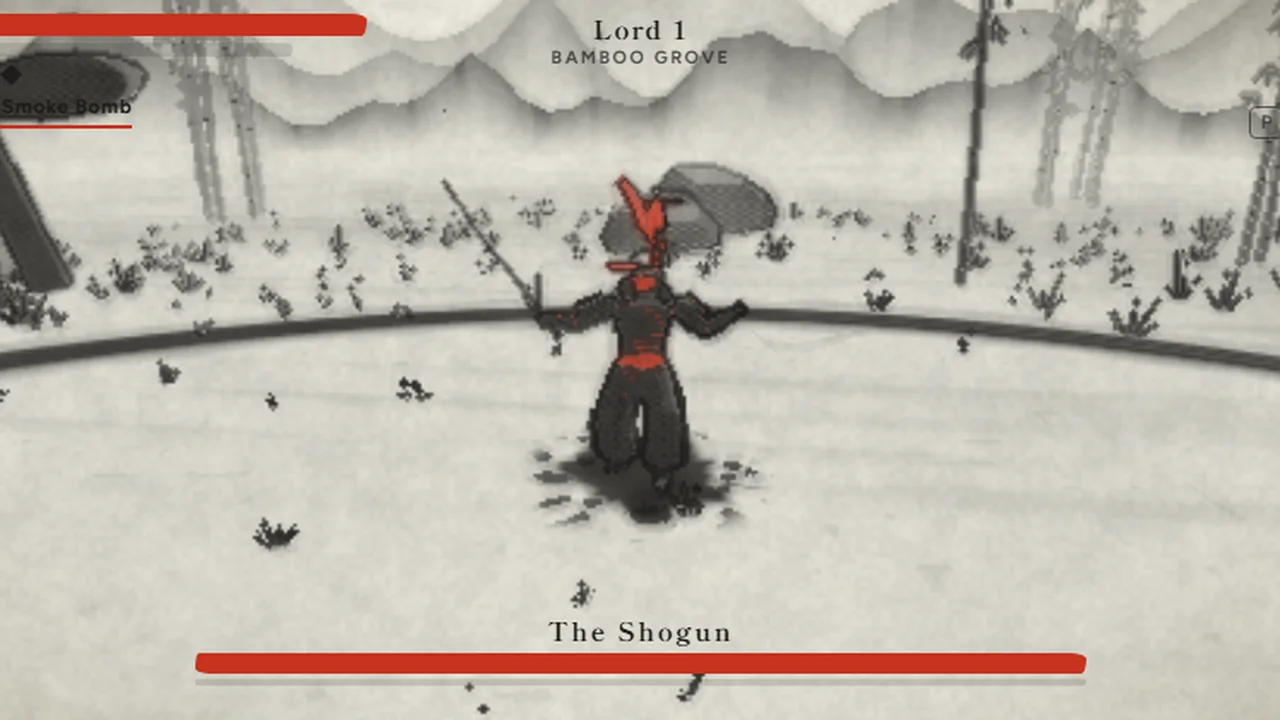
Step 4: Test Against Bosses
Boss encounters can help you understand whether you feel comfortable attacking and repositioning with your chosen weapon.
Avoid attacking blindly into a boss's guard. Learn when to defend and when to attack.
Our Thousand Strikes boss guidecovers dodge timing, positioning and Boss Rush preparation in more detail.
Step 5: Choose Based on Consistency
After testing all four weapons, choose the one that allows you to:
- Land attacks comfortably.
- Recognize when to stop attacking.
- Move away from dangerous situations.
- Stay alive longer.
- Enjoy the combat experience.
Consistency matters more than choosing a weapon based on its appearance alone.
Weapons and Ninja Arts: What Should You Focus On?
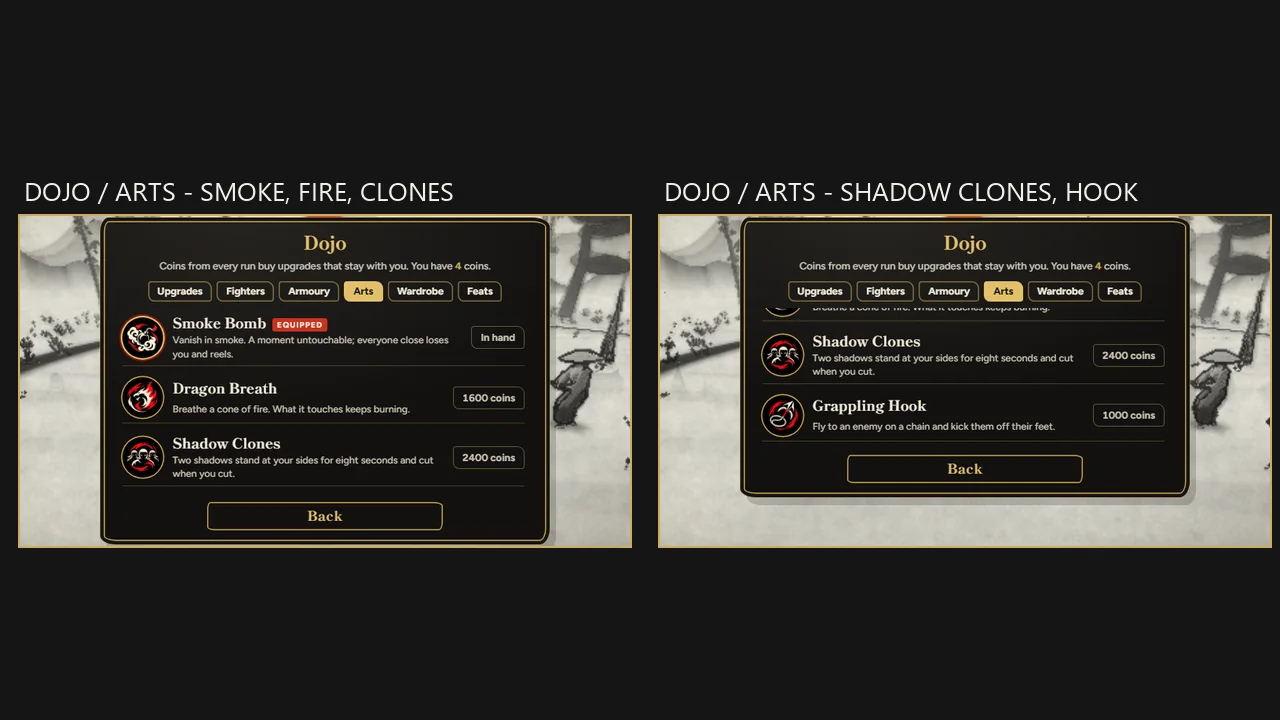
Weapons are only part of your combat setup. Thousand Strikes also features ninja arts, including smoke, fire, shadow clones, and grappling hook.
If you are still learning the game, avoid changing too many things at once.
Try keeping the same weapon while testing a ninja art. This makes it easier to understand what each ability does and whether it helps your combat approach.
For example, you can:
- Choose a weapon you already understand.
- Test one ninja art.
- Observe how it affects the fight.
- Try another ability in a later run.
- Decide which combination feels most comfortable.
The available public descriptions do not provide a verified complete weapon-and-ability tier list, so experimenting is more reliable than following unsupported rankings.
Common Weapon Selection Mistakes
Mistake 1: Choosing Only by Appearance
A weapon may look powerful but still feel uncomfortable to use. Spend some time testing its attack timing before deciding it is your favorite.
Mistake 2: Assuming the Biggest Weapon Is the Strongest
The Nodachi's large appearance does not prove it has the highest damage. Without verified weapon statistics, avoid assuming that appearance determines strength.
Mistake 3: Switching Weapons Too Frequently
If you change weapons every few seconds, it becomes difficult to learn attack timing and positioning.
Give each weapon a reasonable test before making a decision.
Mistake 4: Ignoring Defensive Skills
Your weapon does not replace movement, guarding, and dodging.
Even if you enjoy an aggressive combat style, you still need to recognize enemy attacks and avoid getting surrounded.
Mistake 5: Following Unverified Tier Lists
A weapon tier list is only useful when it is based on actual testing and clear criteria.
Until reliable damage, attack-speed, and range comparisons are available, choose a weapon based on your own experience.
Frequently Asked Questions
How many weapons are in Thousand Strikes?
Thousand Strikes features four listed weapons: Katana, Twin Blades, Nodachi, and Kusari Chain.
What is the best weapon in Thousand Strikes?
There is no verified universal best weapon based on the currently available public information. The best weapon depends on which one you can use comfortably and consistently.
Is the Katana good for beginners?
The katana is a natural starting choice because it has a familiar sword-based style. Beginners can use it to focus on learning the game's movement, attack, guard, and dodge mechanics.
Are Twin Blades faster than the Katana?
The available public information does not provide verified attack-speed statistics comparing the Twin Blades and Katana. Test both weapons in-game to compare their actual attack animations and timing.
Is the Nodachi the strongest weapon?
The Nodachi's large appearance does not confirm that it has the highest damage. A verified weapon-stat comparison would be needed to establish a definitive ranking.
Is the Kusari Chain good against groups?
The available public information does not confirm its exact range or group-damage performance. Try it against multiple enemies and observe how it behaves.
Can you change weapons in Thousand Strikes?
Check the current in-game weapon selection and progression options. The available public descriptions list the four weapons but do not fully explain every weapon-switching condition.
Which weapon should I use in Boss Rush?
Choose a weapon whose attack timing you already understand. Boss Rush is generally easier to approach when you can focus on reading boss movements instead of learning a completely unfamiliar weapon.
Final Verdict: Which Thousand Strikes Weapon Should You Choose?
The four weapons in Thousand Strikes give you different styles to experiment with:
- Katana: Start here if you like a traditional sword.
- Twin Blades: Try these if you enjoy dual-wielding.
- Nodachi: Choose this to experiment with a large sword.
- Kusari Chain: Test this if you want a different weapon style.
There is no need to rush into choosing a supposed meta weapon. Experiment with each option, learn its timing, and choose the one that makes you more comfortable during combat.
Once you find your favorite weapon, focus on improving your movement, dodging, guarding, and boss timing. Those skills will help you regardless of which weapon you use.
Ready to test all four weapons?Play Thousand Strikes on CrazyGamesand find the weapon style that suits you best.
Gameplay screenshots were captured by GameBuddy while playing the official Thousand Strikes demo onCrazyGames. Weapon names and game facts were checked against the same game page.